
Crate Training: One of the Best Skills You Can Teach Your Dog
For some dog owners, the word crate can feel a little harsh. But when it’s introduced the right way, a crate isn’t punishment at all.
It becomes a safe place to rest, settle, and simply turn off.
At Devenney Ranch Gun Dog, crate training is part of the foundation we build with the dogs we work with. Whether it’s a young puppy, a future hunting dog, or a dog that simply needs more structure at home, learning to be comfortable in a crate is a valuable life skill.
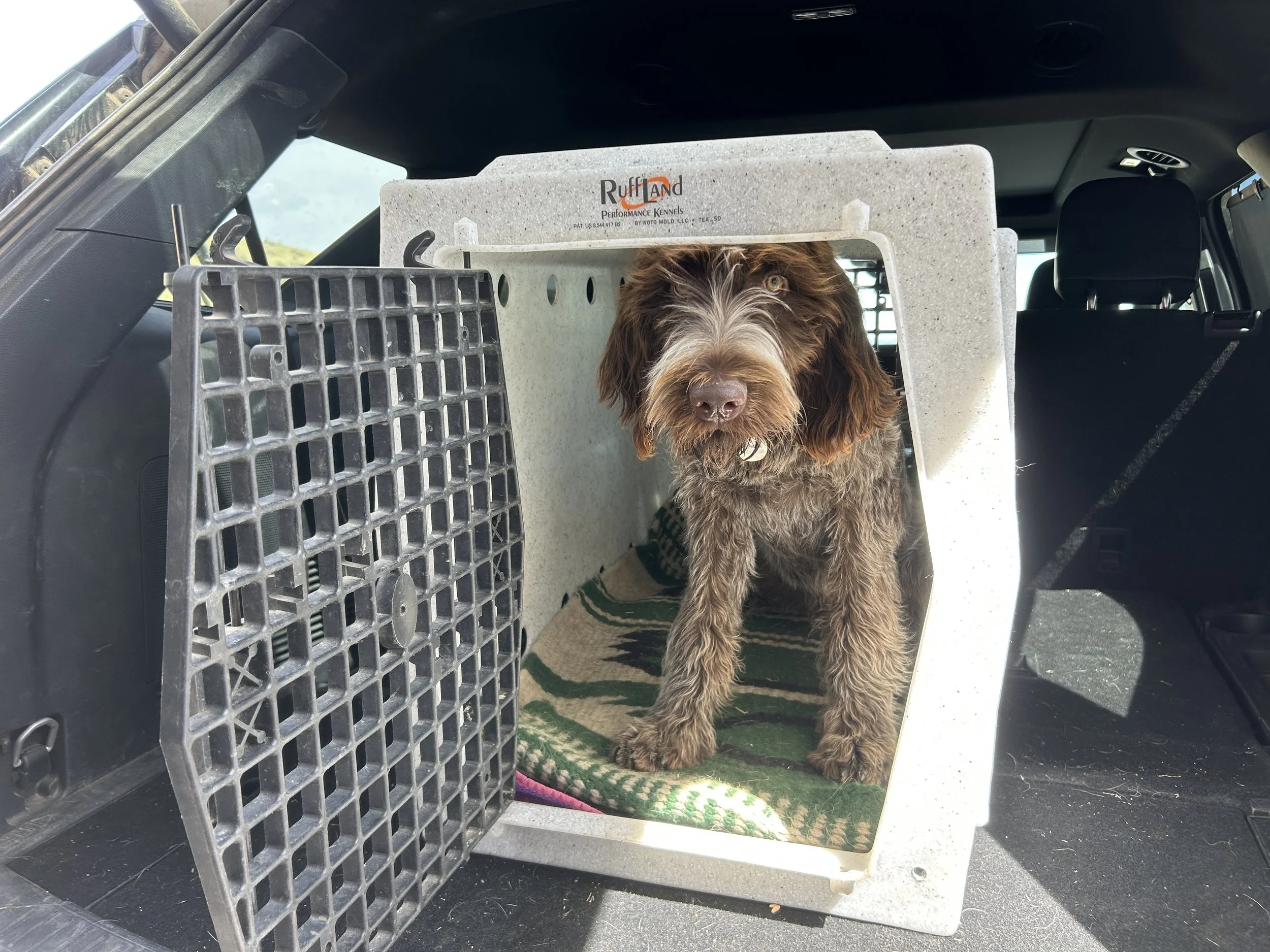
Dogs Need to Learn How to Settle
One thing we see often with young dogs is that they don’t always know when they’re tired.
An overtired puppy doesn’t necessarily curl up and go to sleep. Sometimes they do the exact opposite. They get wild, mouthy, restless, and into everything.
That’s where the crate can help.
It gives the dog a quiet place where nothing is expected of them. No following you around the house. No looking for the next thing to get into. No constant stimulation.
Just rest.
Over time, many dogs actually begin choosing their crate on their own because they associate it with being comfortable and safe.
It Also Teaches Independence
We love having our dogs with us, but they also need to learn that they can be okay without being attached to us every minute of the day.
That becomes especially important for hunting dogs.
There will be times when your dog needs to wait quietly in a vehicle, dog box, hunting camp, hotel, training area, or while another dog is working.
Crate training can also make travel, boarding, veterinary stays, and overnight trips much less stressful.
Being able to settle quietly is a skill just like recall, place, or leash work.
A Crate Helps Create Routine
Dogs do well when they understand what comes next.
There is a time to eat.
A time to train.
A time to play.
And a time to rest.
For puppies, a crate can also be a huge help with house training and establishing a daily routine.
The key is consistency.
The crate should never be used as a threat or only when you’re leaving the house. We want the dog to learn that going into the crate simply means:
It’s time to relax.
Practice crating while you’re home, too. Let them nap while you work, cook dinner, or go about your day.
That helps prevent the crate from always meaning, “My people are leaving.”
Crating Doesn't Mean Leaving a Dog Locked Up All Day
There is a big difference between crate training and simply warehousing a dog.
Dogs need exercise, interaction, training, and opportunities to use their brains.
Hunting dogs especially need to move, explore, and work.
The crate is just one part of a balanced day.
At Devenney Ranch Gun Dog, we want dogs that can go out and work hard, use their natural drive, and enjoy the field—but then come back inside and settle.
That transition from drive to calm is incredibly important.
A Good Hunting Dog Needs an Off Switch
We want enthusiasm in a gun dog.
We want bird desire, confidence, stamina, and a dog that is ready to work.
But we also want that same dog to be enjoyable to live with.
A dog should be able to spend the morning charging through cover and then come home, relax, and be part of the family.
That “off switch” doesn’t always happen naturally.
Sometimes it has to be taught.
Crate training is one of the ways we begin teaching it.
Start Before You Need the Crate
One of the best reasons to crate train your dog is that someday you may really need it.
Travel.
An overnight veterinary stay.
A hunting trip.
A hotel.
An injury that requires restricted activity.
Those situations are stressful enough without suddenly asking a dog that has never been crated to accept confinement.
It is much easier to teach crate comfort when your dog is young and life is normal.
Even if your adult dog eventually has free run of the house, knowing how to calmly rest in a crate is something they can use for the rest of their life.
The Crate Is a Tool, Not the Goal
The goal of crate training isn’t to keep a dog confined.
It’s actually the opposite.
Structure helps dogs earn more freedom.
We teach them how to settle, how to be alone, how to wait, and how to relax. As those habits develop, we can trust them with more freedom in the house, on the road, and in everyday life.
For us, crate training is simply another part of developing a calm, confident, dependable dog.
One that knows when it’s time to work—and when it’s okay to just rest.
Devenney Ranch Gun Dog
Developing dependable hunting partners for the field and the home.
Or talk to Rich directly 970-389-6154