
What Age Should You Send a Hunting Dog to a Trainer?
It's one of the most common questions I hear from new hunting dog owners: when should I send my puppy to a trainer?
Here's the honest answer: Training has already started.
From the day your puppy comes home, they are learning. They're learning what gets rewarded and what doesn't, whether commands are optional, how you respond when they make a mistake, and what you expect from them. Every interaction is information. The question isn't really when training begins. It began the moment they walked in the door.
The better question is what should we be teaching at each stage of the dog's development?
The first few months: build the dog before you build the gun dog
With a young puppy, I'm not interested in drilling commands. I'm interested in building confidence.
This is the time for positive exposure. Different environments, surfaces, people, appropriate dogs, travel, crates, and everyday experiences that teach a young dog the world is not something to be anxious about. It's also when some genuinely important habits begin to form: coming when called, accepting a crate, learning basic boundaries, settling when asked, being comfortable away from home and away from the litter.
None of that sounds as exciting as a beautiful point over a bird. But it's the foundation that makes everything that comes later actually stick.
Around five to six months: structure starts taking shape
For many dogs, somewhere around five to six months is when more structured training can begin. That doesn't mean every dog is ready for the same thing at the same age.
Maturity matters. Confidence matters. Temperament matters. What happened in the first few months matters. A bold, confident six-month-old may be ready for challenges that would overwhelm another dog of exactly the same age. We train the dog in front of us, not the date on the calendar.
At this stage, we're building dependable communication and introducing appropriate experiences while keeping the dog enthusiastic about the work. The moment training feels like pressure without understanding, you've moved too fast.
Obedience and bird work should develop together
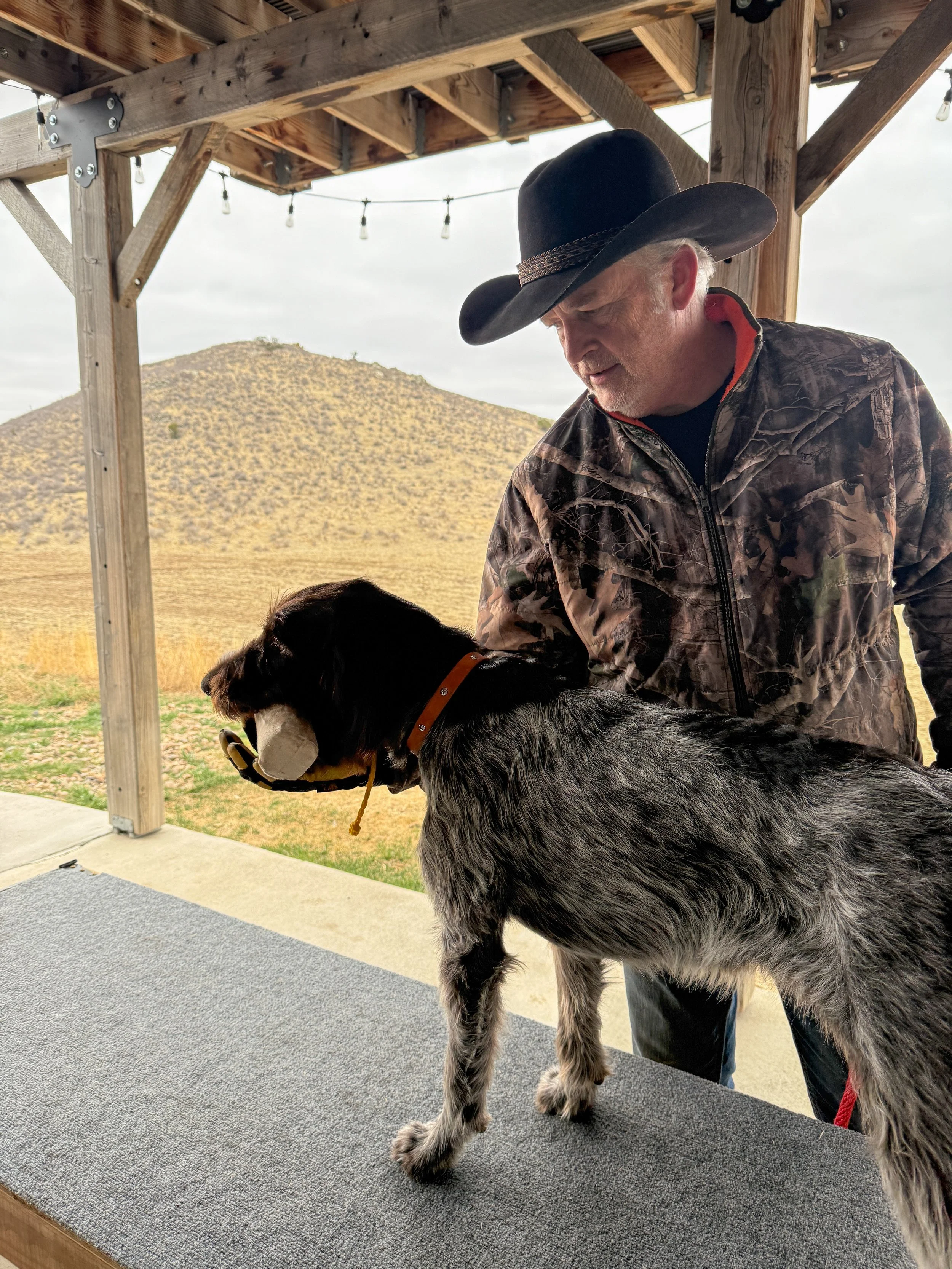
One mistake owners sometimes make is thinking they need to completely finish obedience before introducing their dog to birds. For a hunting dog, that gets it backwards.
Birds tell you a great deal about a young dog. Does he want to search? How does he use his nose? Does pointing instinct begin to show? How does he respond when the bird moves? We're not looking for perfection from a young dog. We're looking for potential. Then we begin putting structure around the natural ability that's already there. The goal is to develop the hunting dog that exists in that dog, not manufacture one from scratch.
Gun introduction is a process, not a test
Gunfire should never be something you simply expose a puppy to in order to find out whether they're afraid. That's not a test. It's a gamble with consequences that can take months to repair.
Proper gun introduction is a progression. The dog needs to be confident, engaged, and focused on something positive before sound is introduced at all. And when it is, it happens at an appropriate distance and intensity, paired with something the dog already loves. Done right, the gun becomes part of the picture they're excited about. Rushed, it creates a fear response that gets in the way of everything else you're trying to build.
This is one area where patience has a direct return on investment.
Don't wait for a problem before involving a trainer
Professional training isn't only for dogs with issues. In fact, one of the best times to involve a trainer is before problems develop — because waiting has a cost.
Pulling on the lead becomes normal. Ignoring recall becomes a habit. Breaking boundaries stops feeling like a mistake and starts feeling like a game. Overexcitement becomes increasingly hard to interrupt. By the time the owner decides to address it, they're not teaching a new behavior. They're trying to replace one the dog has practiced hundreds of times. That's a different and more difficult job.
A strong foundation built early makes every subsequent stage of training considerably easier.
But don't rush a young dog either
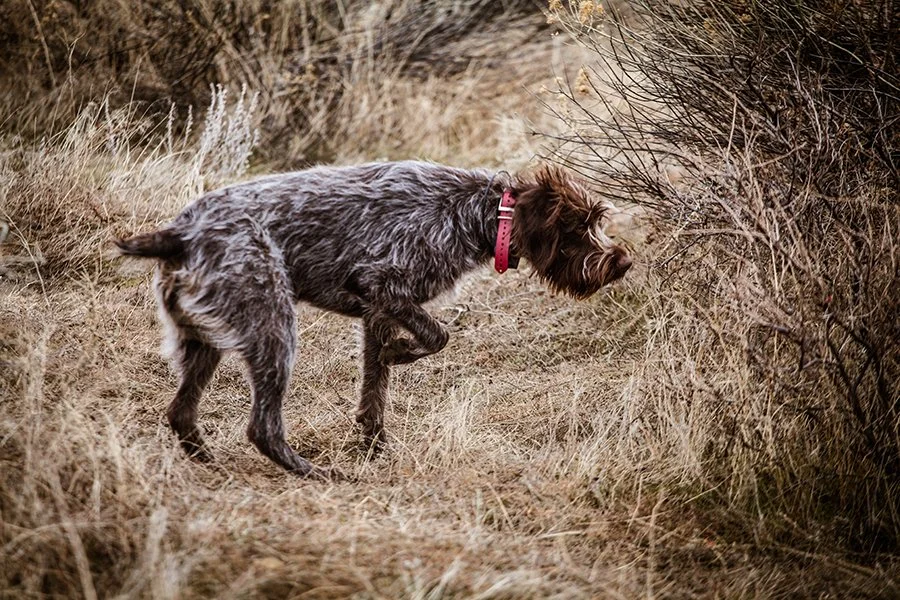
The opposite mistake is expecting too much too soon. Young dogs need space to explore, make decisions, and build confidence through experience. Pressure without understanding doesn't produce reliability. It produces confusion, and confused dogs don't train well.
The approach I use at Devenney Ranch is built around clear expectations, consistency, and patience. I want the dog to genuinely understand what I'm asking before I increase the difficulty. That foundation becomes especially important when distractions increase and the work moves into the field.
Every hunting dog develops differently
Breed, genetics, temperament, and individual history all shape how a dog develops. Two littermates can mature at completely different rates. That's why I'm cautious about promising a dog will reach a particular milestone simply because they've reached a certain age - that's not how it works.
My job is to evaluate where the dog is today and determine what the next appropriate step is. Sometimes that means moving forward. Sometimes it means slowing down. Both can be the right call.
What your young hunting dog should be developing
Before worrying about advanced field work, here's what I want to see in a young dog: confidence in new environments, a positive relationship with their handler, an understanding of basic boundaries, reliable recall, comfort with a crate and structured routines, appropriate bird exposure, and genuine enthusiasm for working.
From that foundation, training can progress toward more advanced obedience, field work, bird handling, gunfire, and the specific skills needed for the type of hunting you plan to do together.
Start with the dog you have
You don't need to wait until your puppy hits some magic age to start building a hunting partner. And you don't need to have everything figured out before talking with a trainer.
Every program at Devenney Ranch starts with a conversation about your dog - their age, breed, temperament, what training has happened so far, and what you ultimately want to accomplish. From there we figure out the right next step together, whether that's something you should be working on at home right now or whether your dog is ready for structured professional training.
Developing a great hunting dog isn't about getting there as fast as possible. It's about building the right dog, one step at a time.
If you've got a young hunting dog and you're not sure what should come next, reach out. We're happy to talk it through.
Talk to us about your dog → or call Rich directly at 970-389-6154.