
Is Your Hunting Dog Really Ready for Opening Day?
There's a version of ready that shows up in the backyard. Recall looks solid. Whoa is coming along. The dog retrieves a bumper, stays reasonably focused during a short session, and you head inside feeling good about where things are.
Then opening day arrives. Birds in the air, shots going off, unfamiliar dogs, new terrain, scent everywhere, excitement at a level the backyard never produced - and that well-behaved dog seems to have forgotten everything you taught him.
That gap, between how a dog performs at home and how they perform when it actually counts, is the thing worth examining before the season starts. Not after the first rooster flushes.
Here are seven things worth an honest look.
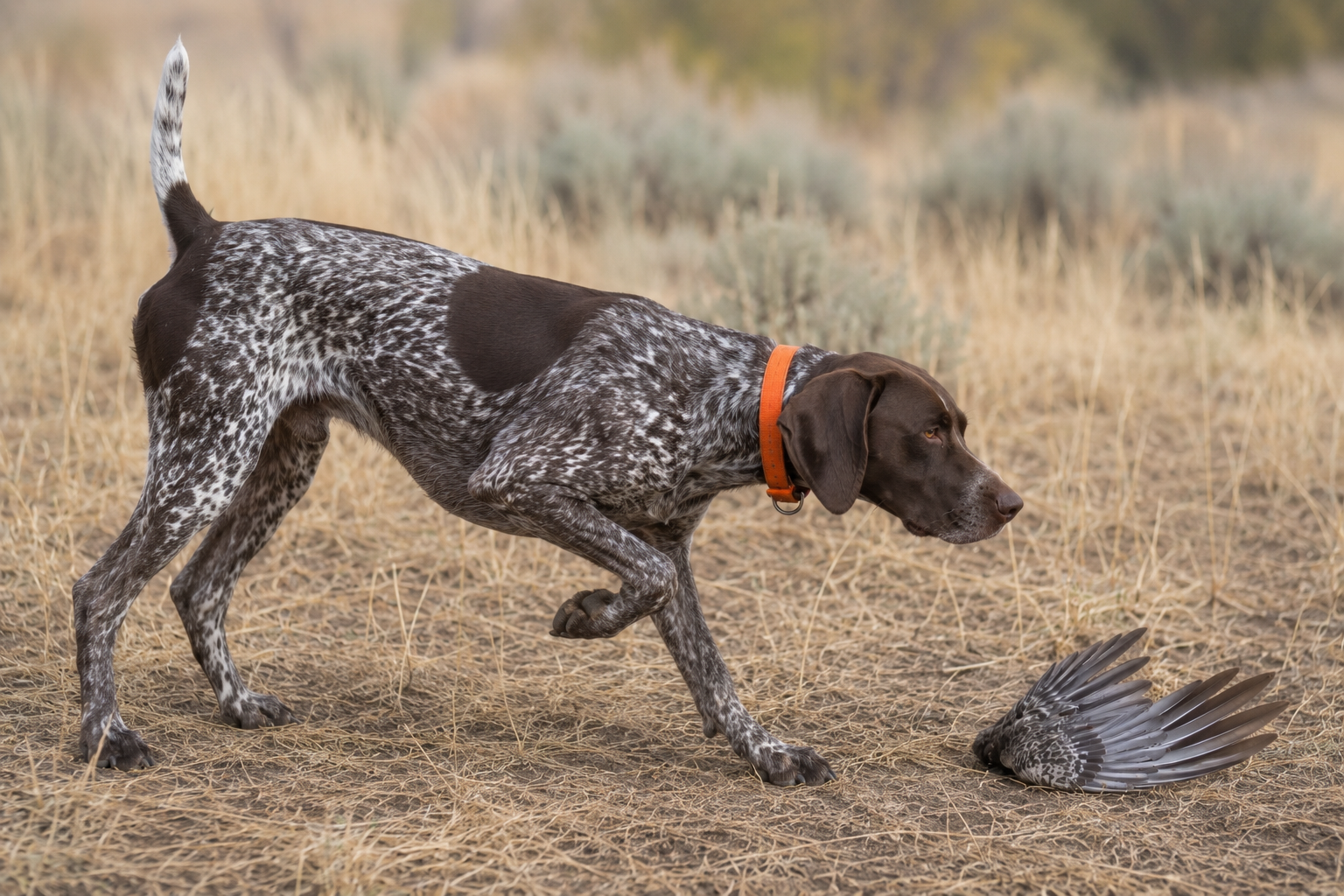
1. Does your dog recall when it really matters?
Coming when called across a quiet yard is one thing. Coming when called while tracking scent through heavy cover, with birds in the air and other dogs working nearby, is a different test entirely.
The question worth asking is whether your dog comes because they understand the command, or because there isn't anything more interesting happening. In the backyard, those two things look identical. In the field, the difference is immediately obvious.
2. Can your dog stay connected to you while working independently?
A hunting dog should be confident working cover on their own. That's the job. But independence and connection aren't mutually exclusive.
Your dog should be hunting with you, not just near you. Responsive to direction, aware of where you are, able to shift when you shift. The goal isn't to reduce their natural ability. It's to make sure that ability is pointed in the same direction as yours.
3. Is your dog solid around gunfire?
A dog's first real exposure to gunfire should not be opening morning. That's not a gamble worth taking.
Proper gun introduction is a progression, and it matters what you pair the sound with. A dog that associates the gun with birds and excitement is in a completely different place than one that associates it with uncertainty or fear. Rushing that process creates problems that are far harder to undo than they are to prevent.
If you're not fully confident in your dog's response to gunfire, find out now. Not in the field.
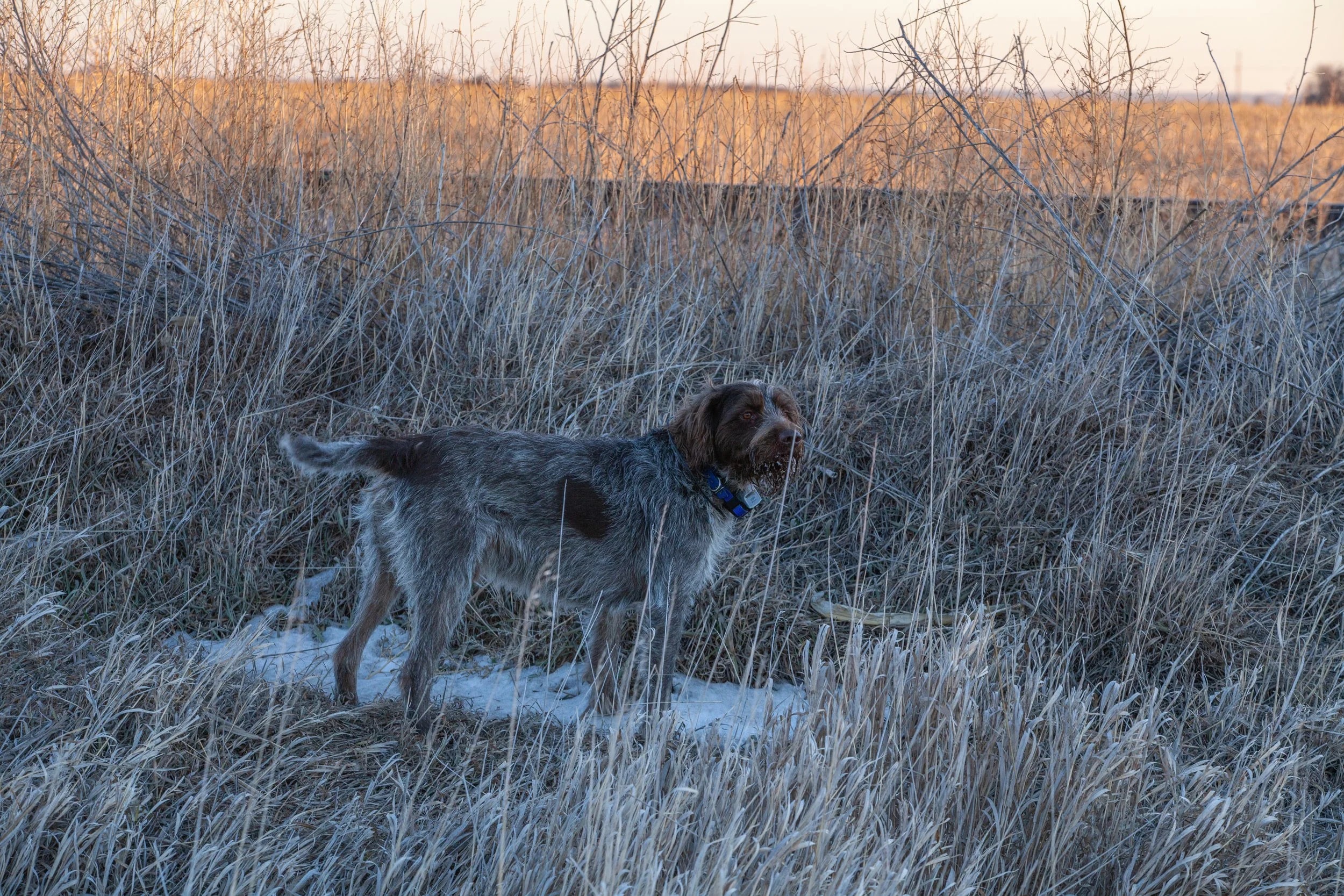
4. Has your dog had enough bird exposure?
You can teach obedience without birds. You cannot prepare a bird dog for hunting without them.
Bird work shows you what the dog naturally brings: prey drive, search, pointing instinct, confidence, problem-solving under pressure. It also gives you the context to develop those qualities and work with the dog's instincts rather than around them.
The point isn't to manufacture a hunting dog. It's to develop the one that's already there.
5. Is your dog physically ready for the work?
This is the one hunters most commonly overlook until it's too late.
Hunting is athletic. Dogs often cover significantly more ground than their handlers while navigating hills, rocks, brush, water, and uneven terrain. A dog that's spent most of summer relatively inactive should not be expected to perform for several hours in demanding country and come out the other side unaffected.
Start building endurance before the season. A dog that's physically conditioned doesn't just last longer. They maintain quality of performance as fatigue sets in, which matters when the best hunting of the day happens in the final hour.
6. Does your dog listen when the excitement rises?
This is probably the most telling test of all, and the one where a lot of dogs fall short.
A dog can look well-trained in a calm session and completely unravel the moment excitement takes over. That's not a character flaw. It's a gap in proofing. Real reliability means the command holds up under distraction, pressure, and arousal, not just when conditions are good.
That kind of reliability comes from repetition in progressively demanding situations. There's no shortcut to it, and there's no substitute for it in the field.
7. Are you prepared to handle the dog you're taking hunting?
Sometimes the dog isn't the weak link.
A handler who doesn't fully understand what their dog has been taught, how commands were built, or what consistency looks like in the field can quietly undermine months of good training without realizing it. Good dog training doesn't end with the trainer. The owner becomes part of the system, and that transition matters.
Before the season, make sure you know what your dog knows, how to reinforce it, and what to do when they test it. Because they will.
Find the holes now, not on opening morning
The field exposes weaknesses fast. Recall that isn't quite reliable. A dog uncertain around gunfire. A young dog overwhelmed by birds. Poor field connection. Lack of stamina. A dog that simply needs more structured experience before being asked to put it all together at once.
Finding those gaps before the season gives you time to work on them. Finding them when the first bird flushes does not.
At Devenney Ranch in Colorado, Rich Devenney works with hunting dogs individually, covering obedience, bird work, gun conditioning, field skills, and the handler connection that holds it all together. Every program starts with the dog in front of him, because no two dogs need exactly the same thing.
If you're not sure your dog is where they need to be before the season, now is the right time to find out.
Talk to us about your dog → or call Rich directly at 970-389-6154.