
Your 5-Month-Old Hunting Puppy Isn't Behind. Here's What They Should Actually Be Learning.
At five months old, a hunting puppy is still very much a puppy, and I get more questions about this age than almost any other. Owners want to know if their dog is on track, and most of the time they are comparing their pup to a standard that does not apply yet. Five months is not when we expect finished obedience, polished field work, or perfect manners. It is a developmental checkpoint, and what we are really looking for is confidence, cooperation, curiosity, and the start of a foundation that everything else gets built on. Progress matters here, not perfection.
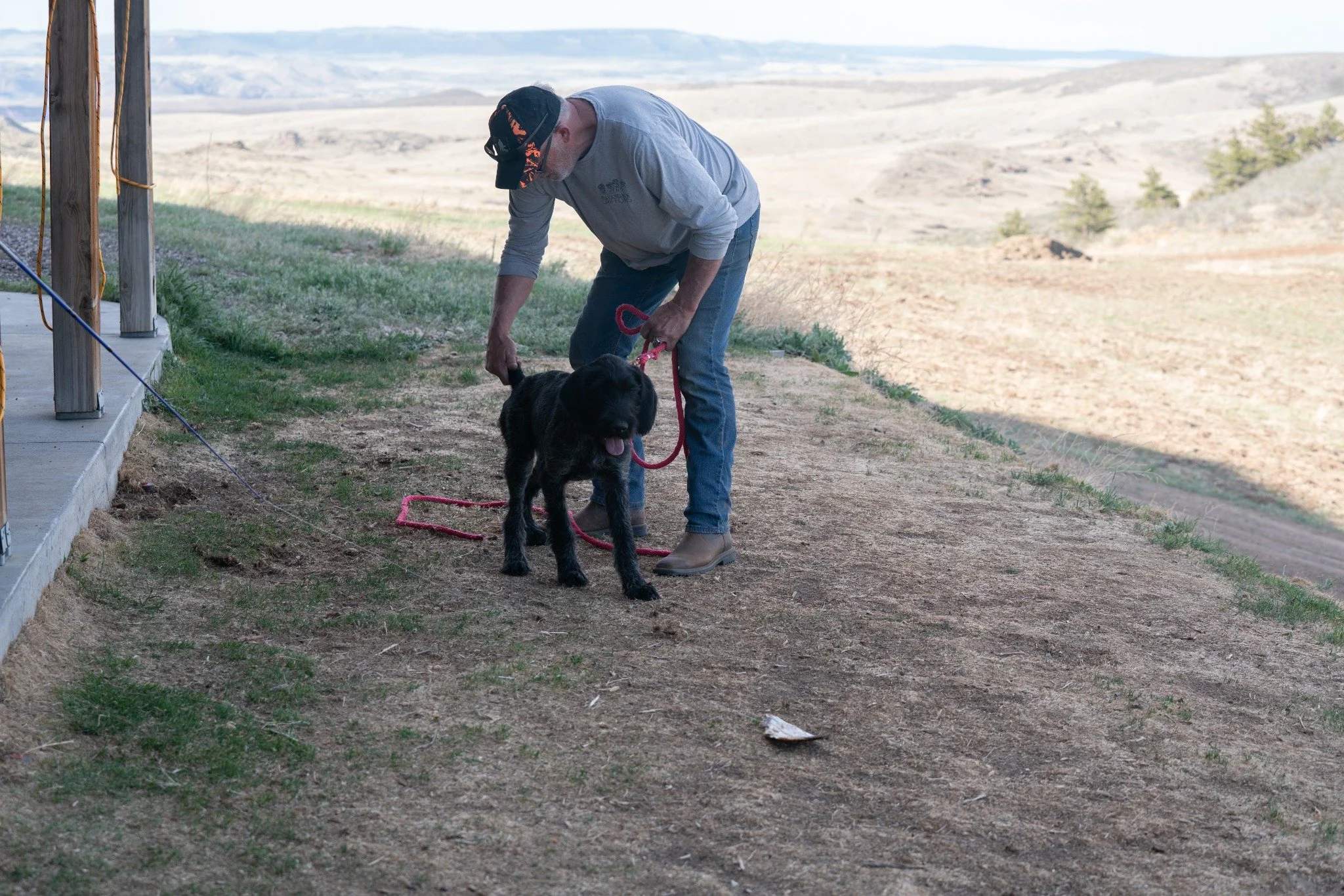
Communication Comes Before Control
The first thing I want to see at this age is a puppy that responds to its name. When you say it, the dog should turn toward you or check in, because the name needs to mean something rather than becoming background noise. That response is the beginning of every conversation you will ever have with this dog, in the yard and eventually in the field.
Recall works the same way. A five-month-old does not need a competition-level return, but the habit should be forming. I tell owners to call the puppy only when they can reinforce it, and to make every return worth the dog's while with praise, movement, or food. Start close and build distance gradually, because a hunting dog will eventually be working far from you and surrounded by real distractions. What you build now is what holds up later.
Leash work belongs in this same category. At this stage we are not demanding a heel. We want the puppy learning that pulling against pressure does not get them anywhere, and that paying attention to your movement and direction gets rewarded. That awareness of the handler is the foundation for far more advanced communication down the road.
Teaching a Puppy How to Settle Matters as Much as Teaching Them to Work
This is the part owners tend to overlook, because it is natural to focus entirely on activity: more retrieving, more field time, more stimulation. But a puppy that is constantly entertained never learns how to relax, and that becomes a real problem in a dog that is supposed to hunt hard and then live calmly in a house.
Place training is one of the best tools for this. Sending a puppy to a bed, platform, or mat and asking them to stay there builds patience and impulse control, even if the duration is still short at five months. Crate training does something similar. Every hunting dog eventually needs to wait quietly, whether that is in a dog box on the way to a field, at a hunting camp, or during an overnight vet stay, and a puppy that learns early that the crate is a safe place to rest handles all of that far more easily as an adult. Both of these, along with quiet evenings and a calm household routine, teach the dog how to turn off. I want a puppy that is enthusiastic when it is time to work and peaceful once the day is done, and that off switch has to be developed on purpose. It does not show up by accident.
Confidence Gets Built Through Exposure, Not Pressure
Five months is a good age to start expanding a puppy's world carefully. Different surfaces, vehicles, water, brush, new buildings, unfamiliar people, and new sounds all give the puppy a chance to succeed in situations that will eventually include tall cover, mud, wind, and other dogs in the field. The goal is not to overwhelm them. It is to let them have enough good experiences that confidence becomes their default.
Field time at this stage should still feel like discovery. I want the puppy running, sniffing, and using its nose without every outing turning into an obedience drill. Sometimes the most useful thing you can do is step back and let the dog figure out what its nose and feet are for. That is where you start to see what the puppy was actually bred to do.
Bird Introduction Is About Desire, Not Precision
This is often the stage owners get most excited about, and it deserves to be handled carefully. The goal with birds at five months is building desire and confidence, not control. Pointing breeds may start showing natural pointing behavior, while flushing and retrieving breeds may show stronger chase, search, or prey drive. None of it needs to be clean yet. What matters is that the puppy walks away thinking birds are fun. Refinement comes much later.
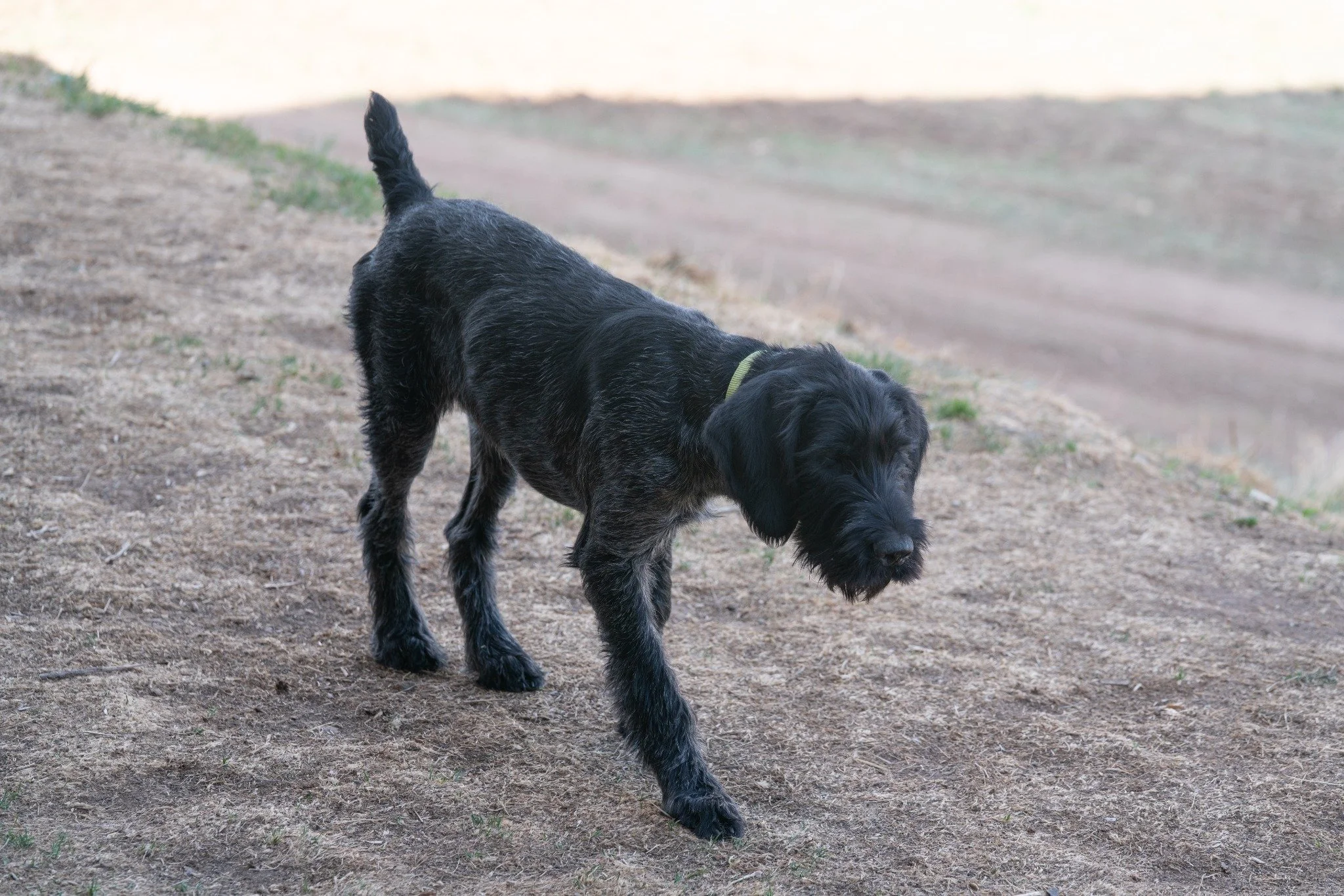
Corrections Should Teach, Not Intimidate
A five-month-old puppy should be starting to understand that some behaviors are allowed and others are not, but corrections have to match the dog's age and understanding. If a puppy does not understand what you are asking, adding pressure will not fix that. It just erodes trust. I teach first, reinforce second, and only correct once I am confident the dog understands the expectation. Training at this age should build a puppy's confidence, not chip away at it.
What Your Puppy Does Not Need Yet
Owners sometimes worry their dog is behind because it does not yet have a perfect recall, a finished heel, long-distance retrieves, or complete field control. None of that belongs at five months, and trying to force it early often gets in the way of the traits we actually want to develop right now, like drive, independence, and bird desire. The foundation comes first. The finished dog comes later.
Every Puppy Develops on Its Own Timeline
I train a small number of dogs at a time on this ranch, and one thing that becomes obvious quickly is how differently puppies mature. One dog might be confidently searching fields at five months while another is still building that confidence. One might show strong bird interest right away, and another might need more exposure before it clicks. Breed, genetics, and individual temperament all play a role, and a good trainer pays attention to the dog in front of them rather than forcing every puppy through the same timeline.
The better question at this stage is not what your puppy should know, but what kind of dog you are building. Every decision you make now, whether it is about structure, exposure, or patience, is shaping that answer. A great gun dog is not built by rushing through a checklist. It is built gradually, and right now you are laying the foundation the rest of it will stand on.
Talk to us about your dog. 970-389-6154